
The Summer Swap: Why Dry Skin Still Needs Hydration, but Just Lighter
|
Time to read 6 min

|
Time to read 6 min
If you've been using the same rich essence all year because your skin is "dry," summer might be the one season where you might want to change things up. Dry skin doesn't stop being dry in July and August. But what dry skin needs in order to stay comfortable changes. Heat plus humidity is usually the reason a formula that felt perfect in February suddenly feels heavy and slow to absorb by August.
This isn't about doing less for your skin in summer. It's about matching the hydration to what your skin is actually asking for in this hot, humid summer.
Dry skin is a skin type: a tendency toward lower oil production and a barrier that loses moisture more easily. Dehydration is a separate, temporary state: even oily skin can be dehydrated, and dry skin can be well-hydrated if it's getting the right kind of support. The confusion between the two is one of the most common reasons people reach for the wrong product in the wrong season.
In winter, dry skin usually benefits from richer, oil-forward formulas because indoor heating and cold air strip moisture fast, and a heavier barrier layer helps hold it in. In hot and humid summer, the equation flips. Heat increases sebum production even in naturally dry skin, sweat adds its own moisture to the skin's surface, and humidity in the air itself becomes a source of hydration your skin can pull from if the formula on top of the skin isn't too occlusive to let it in. Layering an oil-rich essence on top of that combination could lead to dullness or that "suffocated" feeling people describe as their skin "acting up" in summer, even though nothing about their skin type actually changed.
The science here comes down to how humectants behave. Ingredients like hyaluronic acid and glycerin work by drawing water toward the skin, but where that water comes from depends on the air around you. In humid conditions, both ingredients pull moisture from the environment into the skin, which is exactly what you want. In dry air, hyaluronic acid in particular can end up pulling water from deeper skin layers instead, which is part of why it needs to be sealed with something heavier, like an oil-rich formula in winter.
When humidity and heat arrive in summer, that same sealing step becomes less necessary and often counterproductive. A study on a hyaluronic acid and glycerin-based moisturizing fluid found meaningful, lasting improvements in skin hydration and barrier function over 24 hours without relying on heavy occlusive ingredients (Fabbrocini et al., 2017).
The takeaway for dry skin in summer isn't to strip back hydration: it's to let humectants do the work the air is already helping with, rather than trapping everything under a rich layer that traps heat and sweat along with it.
Hydration is only half of what the skin is dealing with in summer. Longer days and stronger UV mean more oxidative stress on the skin, even with sunscreen in the routine.
Topical vitamin C, specifically L-ascorbic acid, works as an antioxidant that helps neutralize some of the free-radical damage UV exposure generates, and research has shown it can support visible improvements in photoaged skin over time when used consistently (Humbert et al., 2003; Pinnell, 2003).
The formulation, though, matters more than most people realize. Research from Duke University's Dr. Sheldon Pinnell established that L-ascorbic acid needs to be formulated at a pH below 3.5 and at a concentration around 20% for optimal absorption into skin tissue (Pinnell et al., 2001), which is also why freshness matters: L-ascorbic acid is unstable and degrades with heat, light, and time, so a serum bottled recently works harder than one that's been sitting on a shelf through a hot summer.
For anyone who's been using our Revitalizing All-in-One Essence through the colder months, summer is a natural point to reassess, not abandon the routine, just adjust it.
The All-in-One Essence Oil-Free carries the same toner-serum-moisturizer approach in one step, formulated with hyaluronic acid, multivitamins, and Emblica-derived vitamin C, but without the oil-forward base that can feel heavy once the air turns humid and hot.
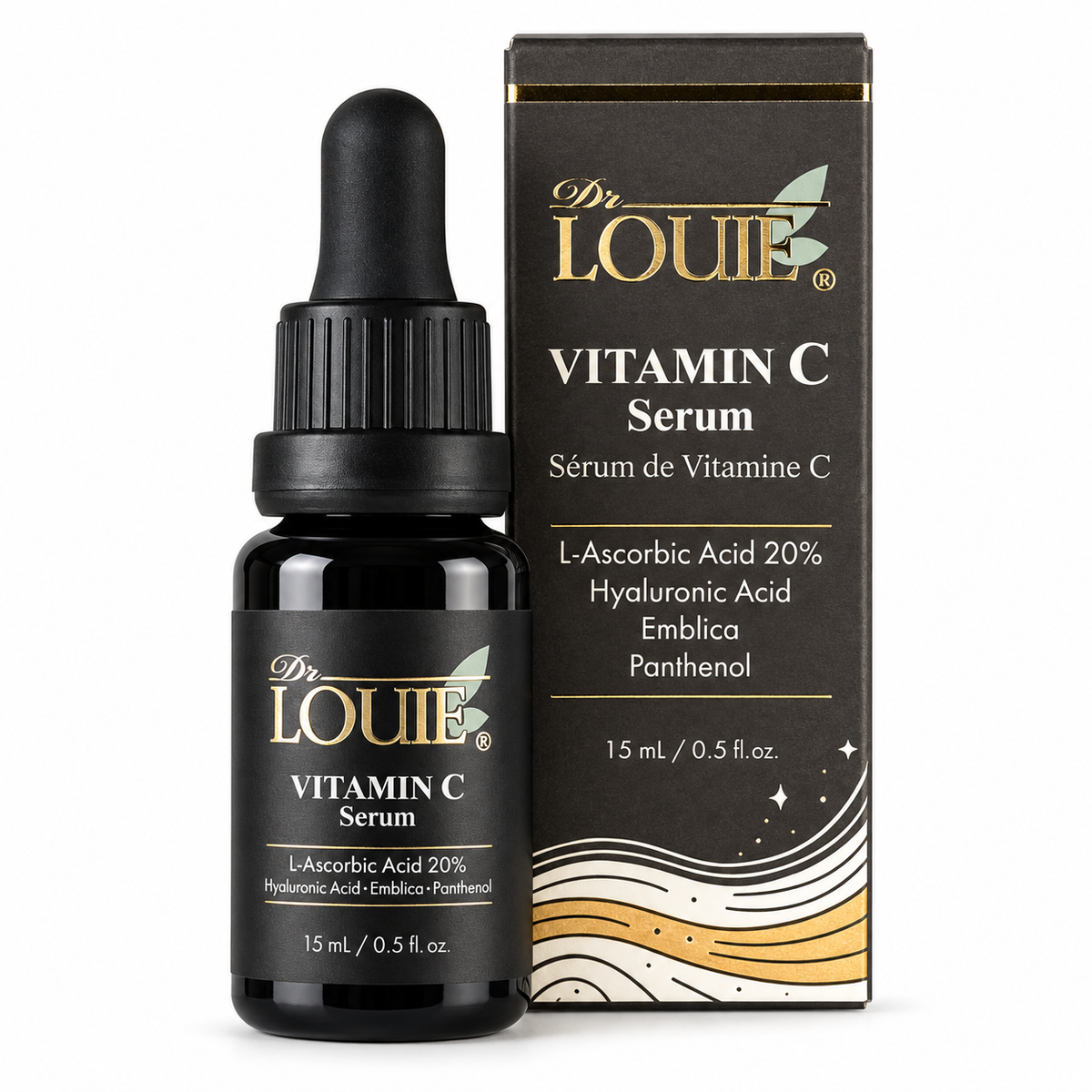
Paired with our Vitamin C Serum — 20% pure L-ascorbic acid at the pH level research points to for absorption, plus hyaluronic acid and panthenol for hydration alongside the antioxidant support — the combination is built to stay weightless but powerfully hydrating.
Applied together. Vitamin C Serum first on clean skin, followed by All-in-One Essence Oil-Free to seal in hydration. It's a routine built for 30°C+ (86°F+) humid days: light enough to disappear into the skin, but still doing the two things summer skin needs most.
Dry skin is a skin type tied to lower oil production; dehydration is a temporary lack of water that any skin type, including oily skin, can experience. If your skin feels tight but also looks shiny or congested in summer, it may be dehydrated rather than truly dry, which is often better addressed with lighter, water-based hydration than a rich oil-forward formula.
Yes. Vitamin C serum is typically applied first on clean skin, followed by a hydrating essence or moisturizer to seal it in. Using them together daily is standard in most vitamin C-based routines.
Not necessarily — some people find their skin still wants the richer formula, especially in air-conditioned environments that mimic winter's dry air. The oil-free swap is most helpful for those noticing congestion, heaviness, or dullness once outdoor humidity rises.
Oil-free doesn't mean hydration-free. The All-in-One Essence Oil-Free still contains hyaluronic acid and multivitamins for hydration and skin support; it simply removes the oil base that can feel heavy in heat and humidity.
No. Vitamin C works as an antioxidant that helps address free-radical damage from UV exposure, but it does not block or absorb UV rays the way sunscreen does. The two work best together, with vitamin C in the morning routine before broad-spectrum SPF.
L-ascorbic acid is naturally unstable and breaks down with exposure to heat, light, and time, becoming less effective as it oxidizes. Formulating and shipping in smaller, fresher batches helps ensure the vitamin C in the bottle is still doing its job when it reaches your skin.
Research points to around 20% as the concentration where percutaneous absorption is optimized, but individual tolerance varies. Patch testing on a small area first is a reasonable precaution for anyone with a history of sensitivity, and DrLOUIE's Vitamin C Serum has been dermatologist-tested for sensitivity tolerability.
The original All-in-One Essence has an oil-forward base suited to drier climates and colder months.
The Oil-Free version keeps the same multivitamin and hyaluronic acid formulation but in a lighter, water-based texture designed to feel weightless in heat and humidity.
Fabbrocini, G., De Vita, V., Izzo, R., Pastore, F., Vitale, M. C., Balato, N., & Balato, A. (2017). The 24-hour skin hydration and barrier function effects of a hyaluronic 1%, glycerin 5%, and Centella asiatica stem cells extract moisturizing fluid: An intra-subject, randomized, assessor-blinded study. Clinical, Cosmetic and Investigational Dermatology, 10, 311–315. https://doi.org/10.2147/CCID.S144180
Humbert, P. G., Haftek, M., Creidi, P., Lapière, C., Nusgens, B., Richard, A., Schmitt, D., Rougier, A., & Zahouani, H. (2003). Topical ascorbic acid on photoaged skin. Clinical, topographical and ultrastructural evaluation: Double-blind study vs. placebo. Experimental Dermatology, 12(3), 237–244. https://doi.org/10.1034/j.1600-0625.2003.00008.x
Pinnell, S. R. (2003). Cutaneous photodamage, oxidative stress, and topical antioxidant protection. Journal of the American Academy of Dermatology, 48(1), 1–19. https://doi.org/10.1067/mjd.2003.16
Pinnell, S. R., Yang, H., Omar, M., Riviere, N. M., DeBuys, H. V., Walker, L. C., Wang, Y., & Levine, M. (2001). Topical L-ascorbic acid: Percutaneous absorption studies. Dermatologic Surgery, 27(2), 137–142. https://doi.org/10.1046/j.1524-4725.2001.00264.x


