
How Come Our Ingredient Lists Are Much Shorter
|
Time to read 3 min

|
Time to read 3 min
At DrLOUIE, we believe skincare formulas should be intentional.
Not every product needs dozens of ingredients to be effective.
Many people associate allergic reactions only with common triggers like fragrance or preservatives. While those are well-known sensitizers, reactions can also occur from ingredients that are generally considered gentle or skin-friendly. Botanical extracts, emulsifiers, surfactants, essential oils, and even soothing agents can occasionally trigger irritation or allergies in certain individuals.
The reality is simple: every additional ingredient introduces another variable for the skin.
That doesn’t mean long ingredient lists are automatically bad. Many excellent products contain dozens of ingredients. However, from a skin compatibility perspective, minimizing unnecessary ingredients may help reduce potential exposure to ingredients that could trigger irritation or sensitivity in some individuals.
This is one reason why we intentionally keep our formulas focused.
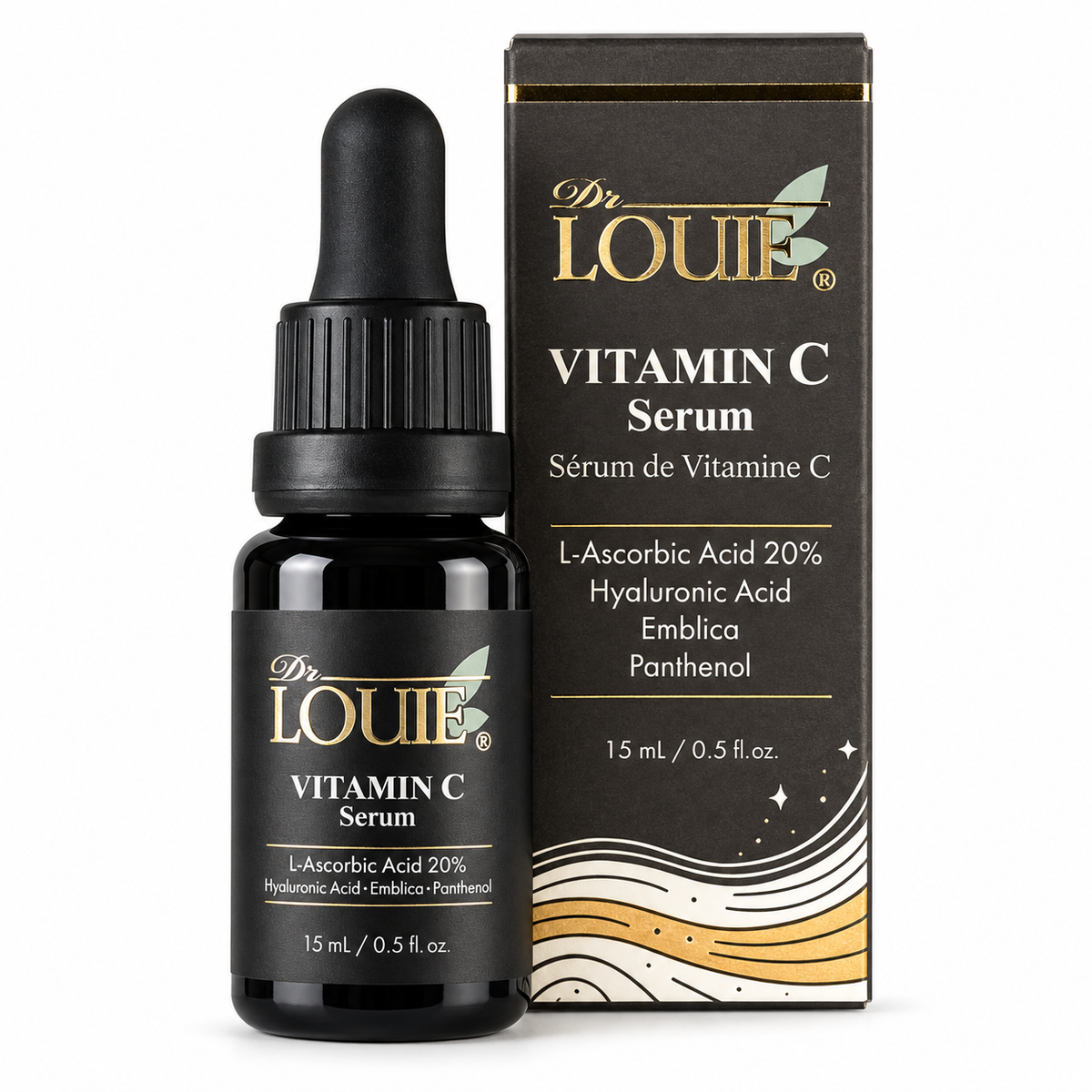
For example:
That level of restraint is intentional. Instead of building formulas around long lists of trend-driven additives, we focus on selecting ingredients that serve a clear purpose within the formula.
Every ingredient has its own irritation or sensitization potential, even if the risk is relatively low. Reducing the total number of ingredients may help reduce the likelihood of reacting to something unexpected.
This can be especially important for individuals with sensitive or reactive skin, where identifying triggers can already be difficult.
When a reaction occurs with a product containing 40–60 ingredients, determining the offending ingredient can become extremely challenging.
With a more streamlined formula, both consumers and professionals have a clearer starting point for identifying possible triggers.
We believe effective skincare does not necessarily come from maximizing ingredient count. In many cases, carefully balancing a smaller number of well-selected ingredients can create a more elegant and purposeful formula.
Rather than asking, “How many ingredients can we add?” we often ask, “Which ingredients are truly necessary here?”
Modern skincare routines often involve multiple products layered together. Even if each product is individually well-formulated, repeatedly exposing the skin to a very large number of total ingredients can increase the chance of irritation for some individuals over time.
Keeping formulas concise helps reduce unnecessary overlap.
Of course, shorter ingredient lists are not automatically safer, and longer ingredient lists are not automatically problematic. Skin reactions are highly individual, and no cosmetic product can guarantee zero risk of irritation or allergy for every person.
But currently available dermatological guidance does support the idea that minimizing unnecessary exposure to potential sensitizers may be beneficial for sensitive skin management — particularly in leave-on skincare products.
For us, minimalist formulation is not about removing ingredients simply for marketing appeal. It is about intentional design: using what is necessary, avoiding what is unnecessary, and respecting the skin’s natural balance whenever possible.
American Academy of Dermatology Association. “Contact Dermatitis: Overview.” American Academy of Dermatology, https://www.aad.org/public/diseases/eczema/types/contact-dermatitis. Accessed 15 May 2026.
Fonacier, Luz S., et al. “Contact Dermatitis: A Practice Parameter—Update 2015.” Journal of Allergy and Clinical Immunology: In Practice, vol. 3, no. 3S, 2015, pp. S1–S39. Elsevier, https://www.jaci-inpractice.org/article/S2213-2198(15)00146-4/fulltext.
National Eczema Association. “Skin Care Products and Ingredients.” National Eczema Association, https://nationaleczema.org/eczema/causes-and-triggers-of-eczema/skin-care-products/. Accessed 15 May 2026.
Mayo Clinic Staff. “Contact Dermatitis.” Mayo Clinic, Mayo Foundation for Medical Education and Research, https://www.mayoclinic.org/diseases-conditions/contact-dermatitis/symptoms-causes/syc-20352742. Accessed 15 May 2026.
Johansen, Jeanne Duus, et al. “European Society of Contact Dermatitis Guideline for Diagnostic Patch Testing.” Contact Dermatitis, vol. 73, no. 4, 2015, pp. 195–221. Wiley Online Library, https://onlinelibrary.wiley.com/doi/10.1111/cod.12432.
Not necessarily. Skin reactions are highly individual, and no cosmetic product can guarantee zero risk of irritation or allergy. However, reducing unnecessary ingredients may help reduce potential exposure to ingredients that could trigger sensitivity in some individuals.
Yes. Even ingredients commonly considered gentle — including botanical extracts, essential oils, emulsifiers, or soothing agents — can occasionally trigger irritation or allergic reactions depending on the individual.
At DrLOUIE, we prefer intentional formulation. Rather than maximizing ingredient count, we focus on selecting ingredients that serve a clear and meaningful purpose within the formula.
No. Many excellent skincare products contain long ingredient lists and perform very well. Ingredient quality, formulation balance, and skin compatibility are often more important than ingredient count alone.


